
Home Page / FallSymposium
Fall 2026 Symposium
Fall Symposium Huge Success
On September 22, 2026 just over 70 community members packed the Redmond Township Hall for the M-119 Tunnel of Trees Scenic Heritage Route Committee’s Fall Symposium celebrating National Scenic Byway Day.
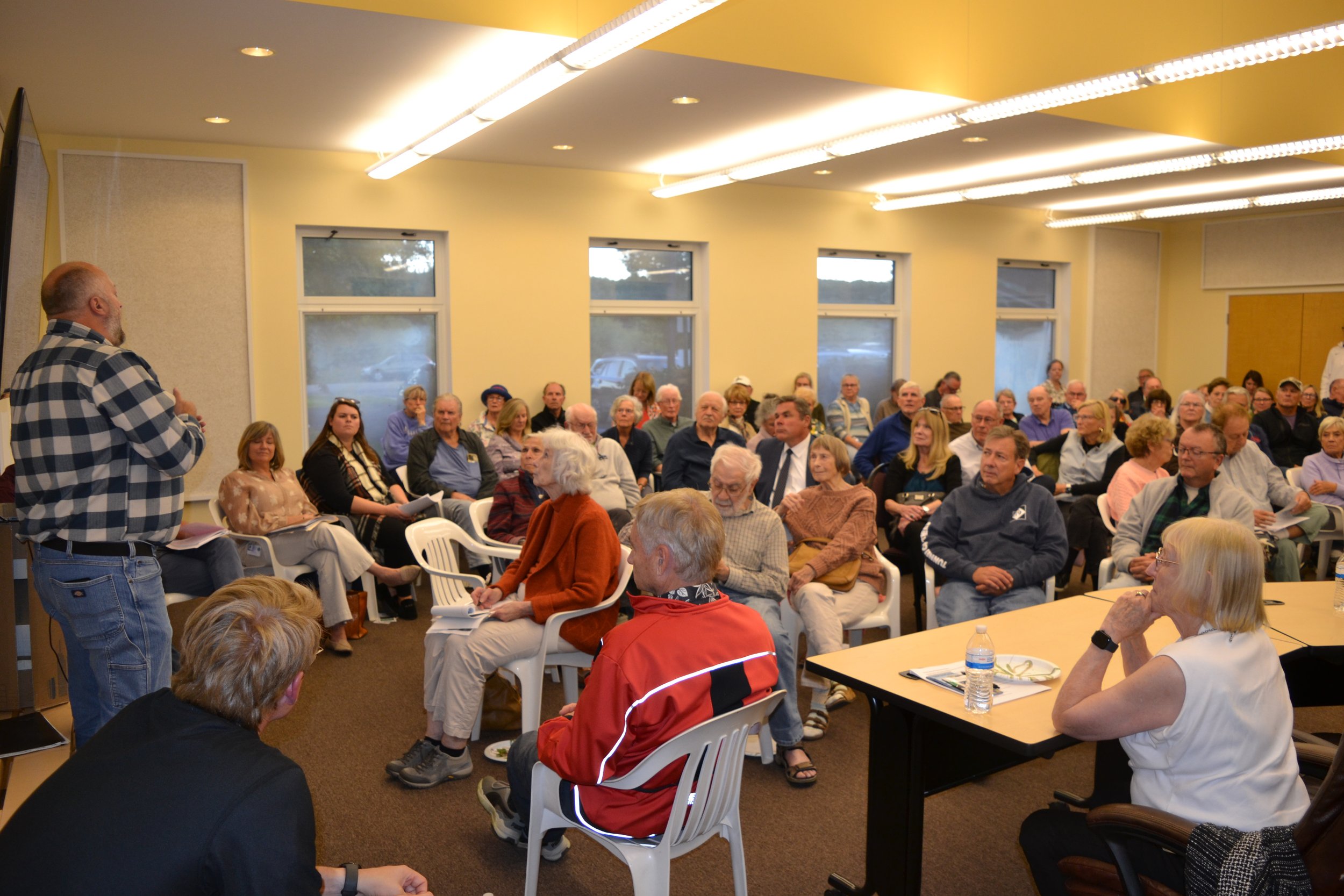
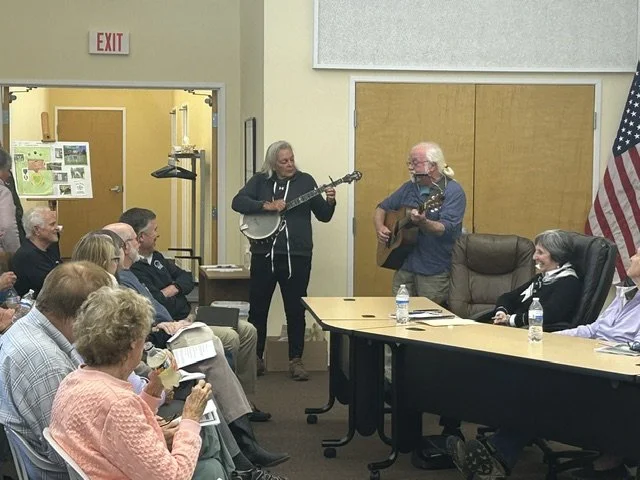

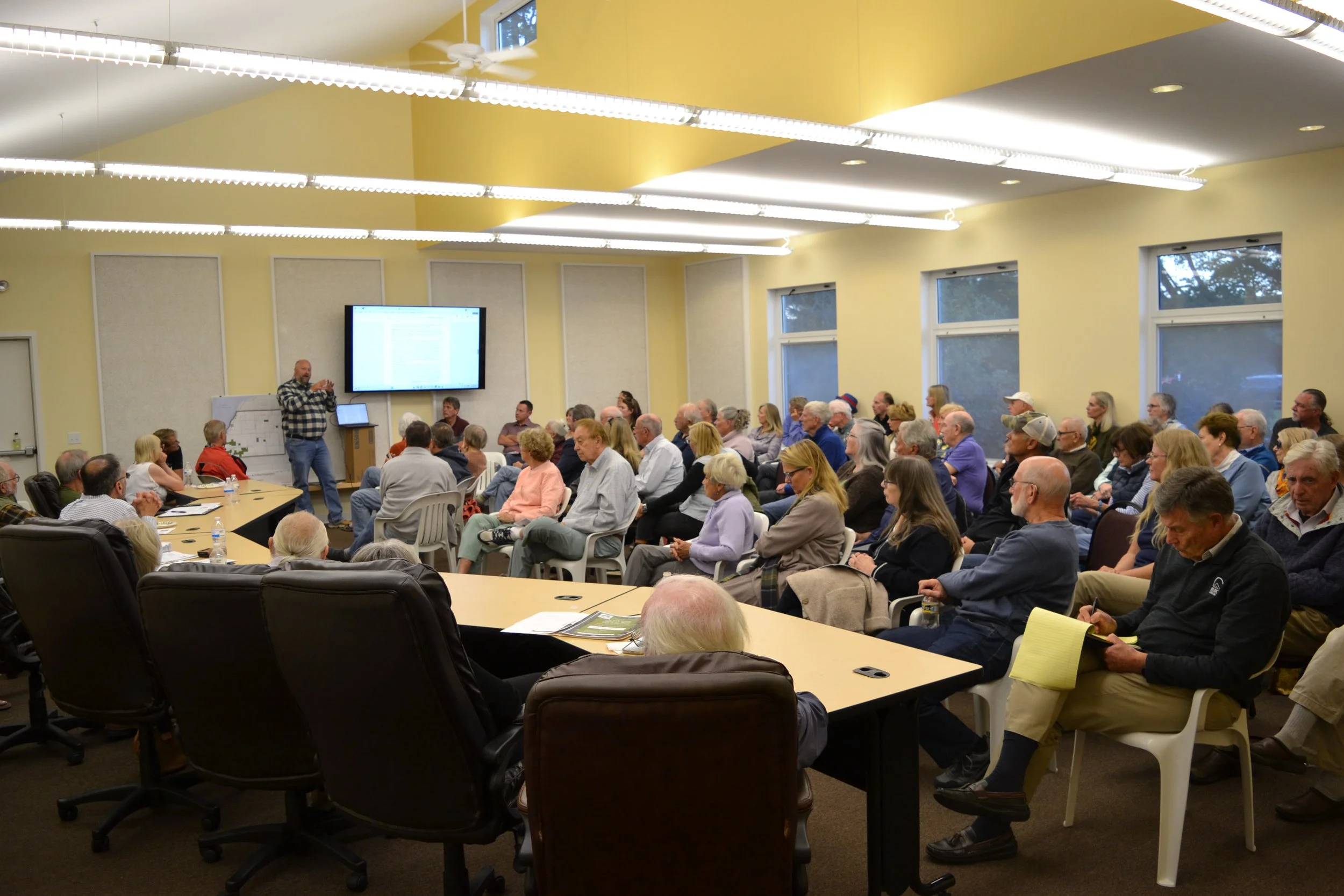
The event kicked off with light refreshments and entertainment from the Peacemeal String Band, giving attendees the opportunity to interact with neighbors and review materials they picked up at the information table.
Among the Symposium’s attendees was State Senator John Damoose whose district includes Emmet County, home to the Tunnel of Trees. Sen. Damoose, who has been actively monitoring the situation along M-119 and advocating for its repair, indicated he came to the symposium to “learn more and what we need to do to preserve M-119 for the next generation.”
The formal agenda included four speakers. The following is a summary of their presentations.

How the Tunnel of Trees became a Designated Heritage Highway, by Naomi Singer, M-119 Tunnel of Trees Scenic Heritage Route Committee Chair
Singer began with a discussion of the road’s rich history, with origins as an ancient footpath used by Native Americans, followed by a transportation route for loggers in the 1880s, a rugged two track for wagons in the early 1900s, and a simple dirt road for automobile traffic in the 1930s, which was when the M-119 first caught the attention of a local conservationist – Harbor Springs native Alice C. Erwin.
In 1936, Erwin used her popular statewide newspaper column to launch a grassroots campaign against the state’s plan to widen and modernize the narrow, winding dirt road. Mobilizing hundreds of residents, she successfully blocked the expansion, and protected the natural beauty of the roadway. In the following years, local families provided some road improvements, hauling stones to cover the dirt path. In 1955, the state paved the road, deliberately keeping it to roughly 1.5 lanes wide with no center line, to protect the historic tree canopy. Concerns that future road modifications might not be so accommodating, local citizens and community organizations began meeting in the 1960s to keep a protective eye over the road, while seeking a more permanent protection for the iconic roadway. Over the decades, these coalitions stopped efforts to pave wide shoulders or straighten curve lines along the route, preserving its original narrow, winding path.
In 1993, following federal action, the Michigan Department of Transportation (MDOT), established the Heritage Route Program to protect state roads possessing outstanding natural, historic, or recreational value. In 2001, the M-119 Heritage Route Committee was formed and the group began pursuing Heritage Route designation for M-119. Their efforts took two years, and in 2003 the State of Michigan officially designated the northern section of M-119 as the Tunnel of Trees Scenic Heritage Route. In 2007, the designation was expanded to include the West Traverse Township section of the road. This legal status ensures all road maintenance prioritizes ecological preservation, scenic outlooks and the rustic character of the road, over high-capacity vehicle use. Which is why the Tunnel of Trees remains the only state highway without a center line or shoulder.
M-119 Tunnel of Trees Flood Events, by Jay Gailitis, MDOT Gaylord Transportation Service Center Manager
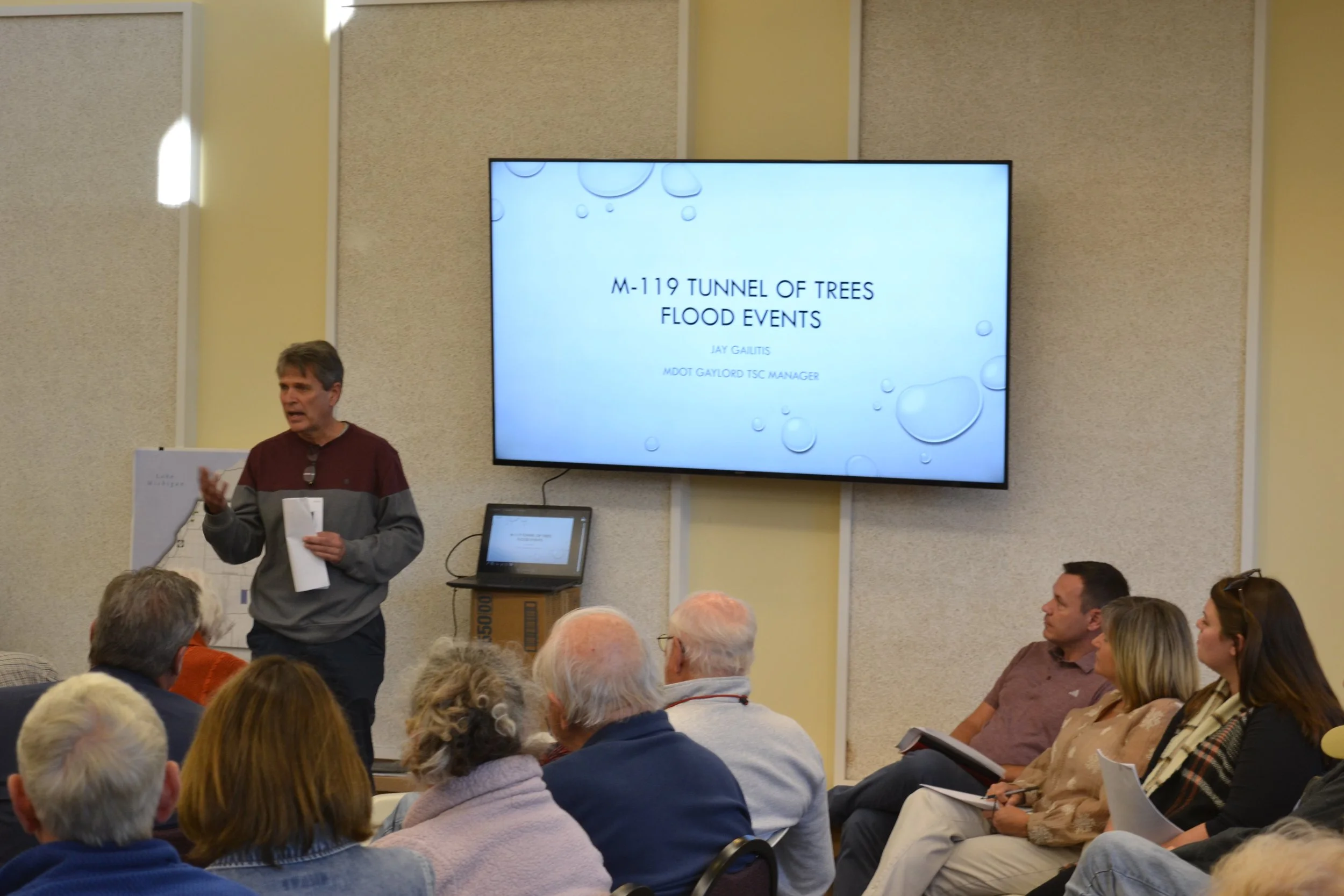
Gailitis provided dramatic photographs and information on the state’s efforts to repair the multiple washouts along M-119 following this Spring’s unpresented flash flooding resulting from historic rainfall and snowmelt.
M-119 at Devils’ Elbow (South of Goodheart) and Horseshoe Bend
The structural study mentioned above will also be used to identify the best repair options to these sections of M-119, which remains indefinitely closed to through traffic, following a massive landslide which destabilized the steep bluff hundreds of feet down the slope. The repairs are expected to be exceptionally challenging and have no projected timeline.
M-119 at South Lamkin Road (Ball Hill)
Erosion caused extensive damage in this area which is now fully open to traffic following MDOT’s repairs and slope stabilization efforts which included building a retaining wall and installing a new guardrail.
M-119 at South Stutsmanville Road
This section of M-119 reopened in early September following completion of a $300,000 slope stabilization project, involving soil nailing to construct a new retaining wall and erecting a new guardrail.
Gailitis stressed the importance of the corridor-wide resiliency study which will identify known and unknown hot spots, make repair recommendations and provide decision making guidance to prevent future damage to the Scenic Heritage Route.
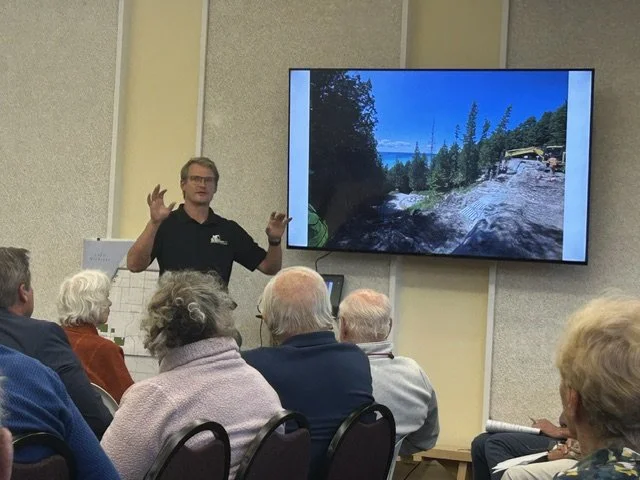
GeoStabilization International Services (GSI), Dustin Griesing, PE, Director of Sales
M-119 Tree Study, Doug Bates, MDOT
M-119 at South Division Road (south of Cross Village)
This portion of the road remains closed following a culvert failure and will likely require extensive and costly repairs. MDOT is currently working with state engineers and out-of-state consultants to fast track a structural study to determine the best fix, which they expect to be either a new culvert or bridge, either of which will present unique challenges and may involve some tree removal. While officials hope to start the repairs next Fall, there is currently no timeline for the repair project.
Colorado-based GSI was contracted by the state to complete the unique repairs to M-119 south of Stutsmanville Road and has worked with area homeowners impacted by the Spring’s flash floods. Since much of the damage to M-119 was unlike anything ever experienced in Michigan, more closely resembling a California mud slide or Colorado rock slide, MDOT looked to experts from out-of-state for repair expertise. GSI was selected based upon their ability to provide the right engineering response quickly, while maintaining the area’s natural aesthetics.
During his presentation, Griesing shared dramatic photographs of the extensive damage to the road and bluff, and documenting the repair process, which featured a technique called soil nailing. He also explained how GSI assists localities and individual property owners with grant applications to lessen their out-of-pocket repair expenses. He indicated the cost of getting GSI’s repair equipment to a job site is high, often too much for an individual homeowner, but may become affordable if a group of homeowners share the expense, or if the equipment is already on site due to a government contract.
For more information on the GSI services, contact Griesing at 810.417.9665 or dustin.griesing@gsi.us.
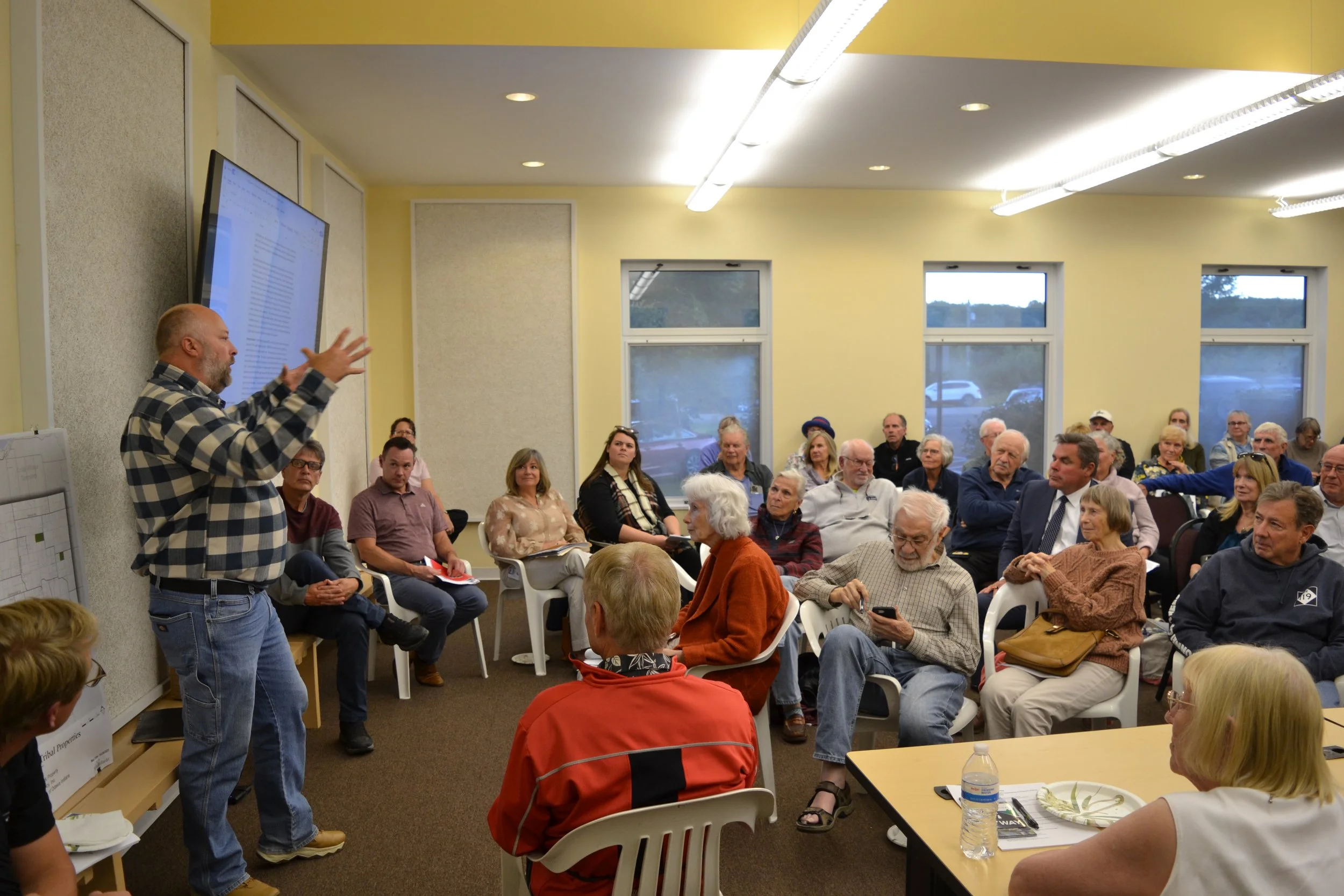
The recent damage to the roadway put much of the focus of the Tunnel of Trees on its winding road, but that is only half of the drive’s charm. The surrounding tree canopy provides the majestic “tunnel,” stunning fall colors, and a home for a variety of wild life. Maintaining the health of the trees and planning for the natural life span, is a critical aspect of preserving the natural beauty of The Tunnel of Trees. For this reason, a regular Tree Health Assessment is conducted. Bates shared and overview the recently completed 2026 Tree Health Assessment, which can be found here.
The Assessment identifies the types of trees along the drive, distinguishing between those that provide the “canopy” and support the local animal habitat and those that do not, identifies trees that may be nearing the end of their natural life cycle, checks on the health of the trees and any threats they may be experiencing, and provides guidance on replanting.
For suggestions for plantings along M-119 to prevent erosion from MDOT please click here.